I didn’t know Scott Adams.
He certainly didn’t know me.
But for years, I knew of him — the way many of us did — through a small daily rectangle that quietly said things most workplaces preferred not to hear out loud.
Dilbert worked because it wasn’t loud. It didn’t shout. It observed. It noticed the strange rituals, the empty language, the way systems drift away from the people inside them. It trusted the reader to recognize the truth without being lectured.
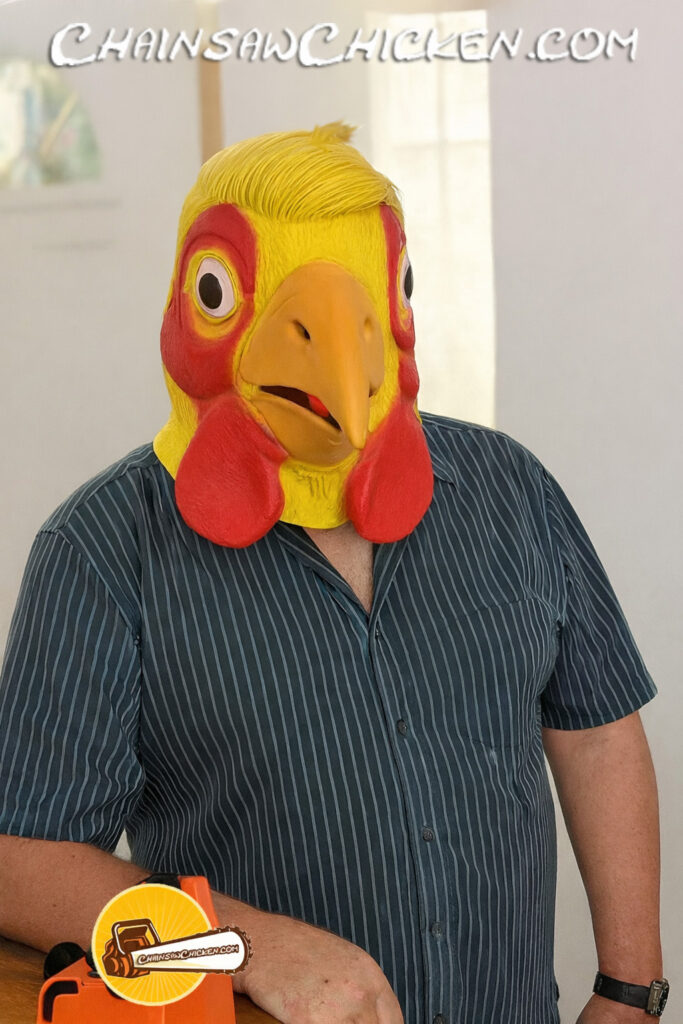
In a very small way, some of those observations run parallel to what Chainsaw Chicken does — standing slightly off to the side, head tilted, pointing at the absurd and letting it speak for itself. Not imitation. Just resonance.
Scott Adams aimed his pen at cubicles and conference rooms. Chainsaw Chicken wanders elsewhere. Different paths, same instinct: when reality becomes strange enough, satire doesn’t need exaggeration — it only needs honesty.
This isn’t a claim of influence or proximity. Just a nod. And a Dilbert haircut.
An acknowledgement across distance.
Some voices help clear the air simply by naming what everyone already feels. When they’re gone, the silence is noticeable.
So this is a small salute from one observer to another.
Nothing more. Nothing claimed.